Miami to Key West Road Trip: The Ultimate Overseas Highway Drive Guide
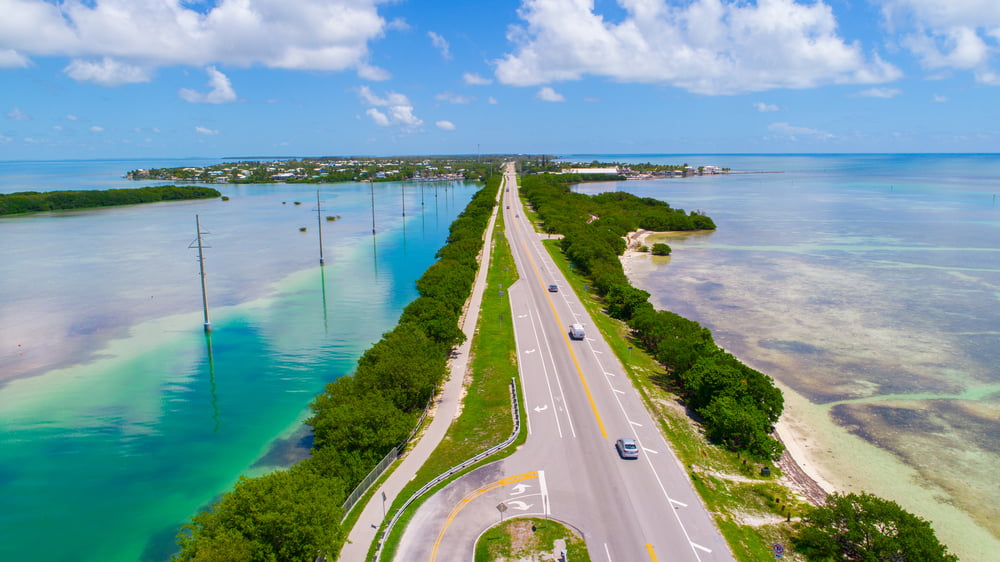
There is exactly one road that matters in South Florida if you want to understand what makes this part of the world different from everywhere else. It is not I-95. It is not the Turnpike. It is the Overseas Highway — 113 miles of US-1 strung across more than 40 islands and 42 bridges, ending at the southernmost point in the continental United States.
Auto Boutique Rental has delivered exotic and luxury cars along this exact route for travelers since 2000. We know which bridges deserve a slow roll with the windows down, which stretches of the Keys still feel undiscovered, and which timing mistakes turn a perfect drive into a frustrating one. This is the guide we wish every first-time Overseas Highway driver had before they left Miami.
“Amazing car selection — picked me up in Tampa and allowed me to drop off in Miami! A++ — a big thank you!”
— Verified Google Review ⭐⭐⭐⭐⭐
Why the Overseas Highway Demands the Right Car
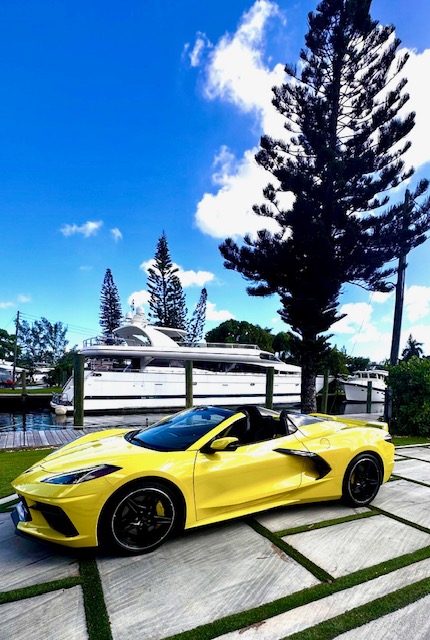
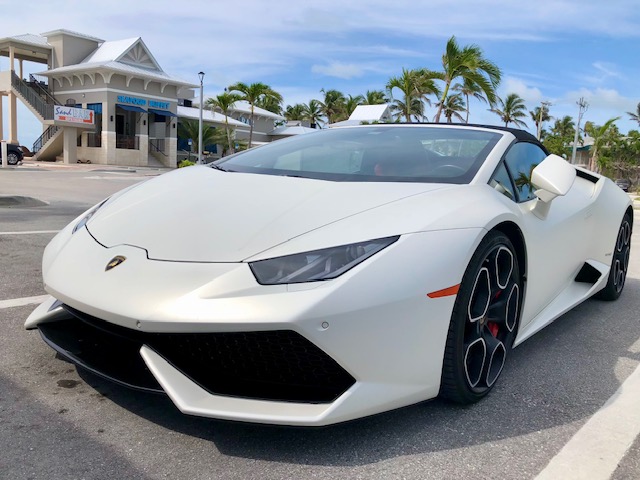
This drive rewards a car that can do two things well: hold a line through long, open-water causeways at speed, and feel composed crawling through single-lane island towns at 35 mph. A Porsche 911 or Corvette C8 handles both without compromise. A convertible — the Ferrari Roma Spider or Lamborghini Huracán Spyder — turns the bridges themselves into the main event, since there is nowhere else in Florida where dropping the top changes the experience this dramatically.
If you are arriving in Miami by air and starting the drive the same day, our team can have your exotic car waiting for you at Miami International Airport (MIA) — curbside, no rental counter, no shuttle. You land, you drive straight onto US-1.
Mile by Mile: What Actually Matters
Miami to Key Largo (Mile Marker 113–106)
The drive begins unremarkably — South Dixie Highway, then the Florida Turnpike extension, then suddenly the skyline disappears and mangroves take over. This is the moment most first-time drivers underestimate: the Overseas Highway officially starts at Key Largo, and almost everyone speeds through the first 20 minutes without realizing the real drive hasn’t started yet.
Key Largo itself is worth a slow pass, not a blow-through. John Pennekamp Coral Reef State Park sits right off the highway, and if you have any flexibility in your schedule, this is the spot to build in an hour rather than treat it as a sign you drove past.
Islamorada (Mile Marker 86–73)
Islamorada calls itself the sportfishing capital of the world, and the marinas along this stretch back that up. This is also where the road starts narrowing and the water starts closing in on both sides — the first real preview of what the Middle and Lower Keys deliver in full.
If you are doing this drive for a sunset arrival rather than a sunrise departure, Islamorada is roughly the halfway mental marker — not in mileage, but in mood. The Upper Keys still feel like an extension of the mainland. South of Islamorada, it stops feeling that way entirely.
The Seven Mile Bridge (Mile Marker 47–40)
This is the bridge everyone has seen in photos, and it is genuinely better in person. Seven miles of open water on both sides, no shoulder traffic, no buildings, just road and ocean to the horizon. This is the single best stretch of the entire drive for a convertible — top down, mid-afternoon light, nothing but water in every direction.
One practical note: the wind across the Seven Mile Bridge can be significant, especially in winter months. A car with real low-speed stability — the Range Rover or G63 AMG, if you’re not in a convertible — handles the crosswind without any drama. It’s worth knowing before you’re in the middle of it.
The Lower Keys to Key West (Mile Marker 40–0)
This final stretch is where the islands get smaller, the speed limits drop, and the pace of everything visibly slows down. Big Pine Key is home to the National Key Deer Refuge — keep an eye out, the deer here are real and protected, and locals drive accordingly. By the time you cross onto Stock Island, you can feel Key West before you actually arrive: the traffic changes character, the architecture shifts, and Duval Street energy starts bleeding out toward the highway.
Mile Marker 0 — the literal end of US-1 — sits a few blocks off Duval Street and is one of the most photographed spots in the Keys for a reason. If you’ve driven the whole route, it’s worth the five minutes to park and find it.
When to Drive It
Winter and early spring (December through April) bring the best weather and the heaviest traffic — Florida’s dry season is also the Keys’ busiest season. If your schedule allows it, a weekday departure from Miami avoids most of the weekend convoy heading down for the same views you are.
Summer brings real heat and the occasional tropical system, but also dramatically lighter traffic and lower hotel rates if you’re staying overnight in Key West. Either season works — the drive itself doesn’t change, only the crowd around you does.
Arriving in Key West
Whether you’ve driven the whole route from Miami or you’re flying directly into Key West International Airport (EYW) and want the car waiting on arrival, Auto Boutique Rental delivers throughout Key West — Old Town, Duval Street, the Truman Annex, and every resort and private residence in between. Our team also coordinates directly with FBO operators at EYW for private aviation arrivals, so your car is staged and ready the moment you step off the tarmac.
If you’re doing the drive one-way — fly into Miami, drive the Overseas Highway, fly out of Key West, or the reverse — we make that simple. Pick up your exotic car rental in Key West or in Miami, and we collect it wherever your trip ends. No round-trip requirement, no doubling back.
What to Actually Bring
- Cash or card for tolls — most of the Turnpike portion before Key Largo is tolled; SunPass or toll-by-plate both work depending on your rental setup
- A real playlist, not just your phone on shuffle — cell service genuinely drops in patches across the Middle Keys
- Sun protection that survives a convertible — the open-bridge sections offer zero shade for long stretches
- Patience around Big Pine Key — the speed limit drops sharply for the Key deer, and it’s enforced
Plan Your Overseas Highway Drive
Auto Boutique Rental has delivered exotic and luxury cars across South Florida since 2000, including direct airport delivery to Miami (MIA) and Key West (EYW), and one-way rentals built specifically for drives like this one. Call or text (305) 804-4502, WhatsApp us, or use the reservation form to start planning.
Frequently Asked Questions — Driving the Overseas Highway
How long does the drive from Miami to Key West actually take?
Without stops, roughly 3.5 to 4 hours covering 160 total miles from downtown Miami. Most first-time drivers should budget closer to 5 to 6 hours to allow for stops in Key Largo, Islamorada, and the Seven Mile Bridge.
What is the best car for the Overseas Highway?
A convertible makes the bridge sections unforgettable — the Ferrari Roma Spider and Lamborghini Huracán Spyder are popular choices. For travelers who want supercar presence with more stability in open-water wind, the Porsche 911 or Range Rover are excellent alternatives.
Can I rent a car at Miami Airport and drop it off in Key West?
Yes — one-way delivery is one of our most popular services for exactly this drive. Pick up at Miami International Airport (MIA) and we collect the vehicle in Key West at the end of your trip.
Is the Seven Mile Bridge actually seven miles long?
Yes — it spans approximately 6.79 miles between Knight’s Key and Little Duck Key, one of the longest bridges in the world when it was built and still one of the most photographed stretches of road in the United States.
Do I need to worry about tolls on this drive?
Yes, the portion of the route on the Florida Turnpike extension before Key Largo is tolled. Most rentals are equipped to handle toll-by-plate billing automatically.
What is the best time of year to drive the Overseas Highway?
December through April offers the best weather but the heaviest traffic. Late spring and early summer offer lighter crowds with still-excellent conditions before peak hurricane season arrives later in the summer.